
Autonomous vehicles
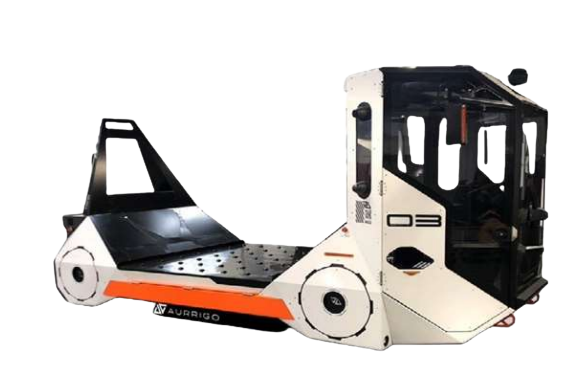
Self-Driving Autonomous Truck
an Automated Guided Vehicle / AGV, or a more advanced variant) used in warehouses, factories, or airports to transport goods, cargo, or heavy loads — without a human driver.
This type of vehicle typically:
Has a flatbed or cargo-carrying platform (or bed) to load goods, pallets, containers, or baggage.
Uses sensors and navigation systems (LiDAR, cameras, etc.) or guidance infrastructure to move autonomously.
Is part of material flow automation: replacing manual tugs/tractors, forklifts, or carts/trucks, thereby improving efficiency and safety.
Is used in controlled environments: warehouses, distribution centers, airports, production plants.

Use cases
This kind of platform is typically used for industrial logistics, warehouse transport, or internal cargo movement — for example:
Moving materials or goods between storage, production, and shipping zones in a factory.
Transporting pallets, crates or baggage inside warehouses, distribution centers, or airports.
Automating internal logistics to reduce manual labor — replacing forklifts, carts, or human-operated tugs.
Operating as part of a smart/factory-automation fleet where multiple vehicles coordinate to move goods.
Self-Driving Mini-Bus
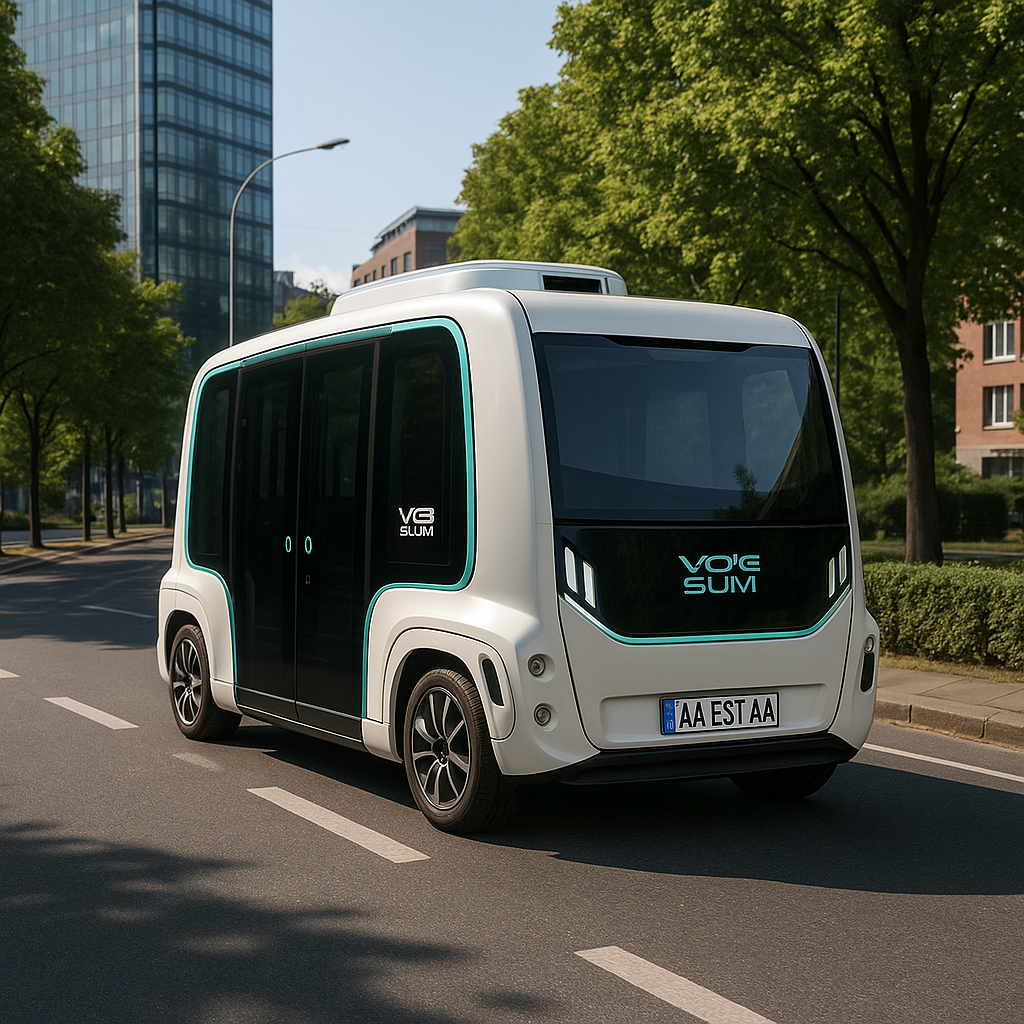
Autonomous self-driving shuttles are vehicles designed to transport passengers without a human driver. They navigate safely and efficiently in various environments, handling different traffic conditions such as segregated roads, shared spaces with bicycles and pedestrians, and areas with low-speed cars.
The design resembles a compact autonomous shuttle / electric shuttle or autonomous cargo / passenger microbus / van, with a boxy cabin and smooth, modern styling.
It fits within the broader class of autonomous electric shuttle / minibus / “people-mover” / micro-transit vehicle — similar in spirit to vehicles like EasyMile EZ10 or other driverless shuttle buses.
Such vehicles aim to provide autonomous, electric-powered, low-speed transport (public transport, last-mile mobility, campus shuttle, short-route transit, etc.).

use cases
Urban / Suburban Public Transit — small-scale public transport replacing traditional minibuses, on fixed or demand-responsive routes.
Campus / Institutional Shuttle — universities, corporate campuses, large hospital complexes, business parks.
Last-Mile & First-Mile Connectivity — from transit hubs (train, metro, bus) to final destinations (workplaces, dorms, neighborhoods).
Airport / Port Transport — shuttle between terminals, parking lots, cargo zones, or passenger transfers.
Low-Traffic or Controlled Zones — e.g. tourist areas, gated communities, residential complexes: where slower, safer electric shuttles make sense.
On-demand Mobility Services — ride-hailing / shared mobility / micro-transit, especially in small-city or suburban contexts.
Self-Driving wheelchair
Vehicle type: Autonomous / electric shuttle or micro-bus / micro-transit vehicle.
Purpose / Use-cases: Last-mile mobility, campus transport, small-city transit, airport shuttle, resort or gated-community mobility, eco-transport in controlled zones.
Propulsion: Electric (battery-powered), zero tailpipe emissions — typical in conceptual EV shuttles aimed at sustainability.
Autonomy potential: If realized, could support semi-autonomous or autonomous driving (low-speed, geofenced), suited for controlled routes.
Passenger capacity: Likely small — perhaps 4–12 passengers depending on configuration (since the body appears compact).

Use Cases
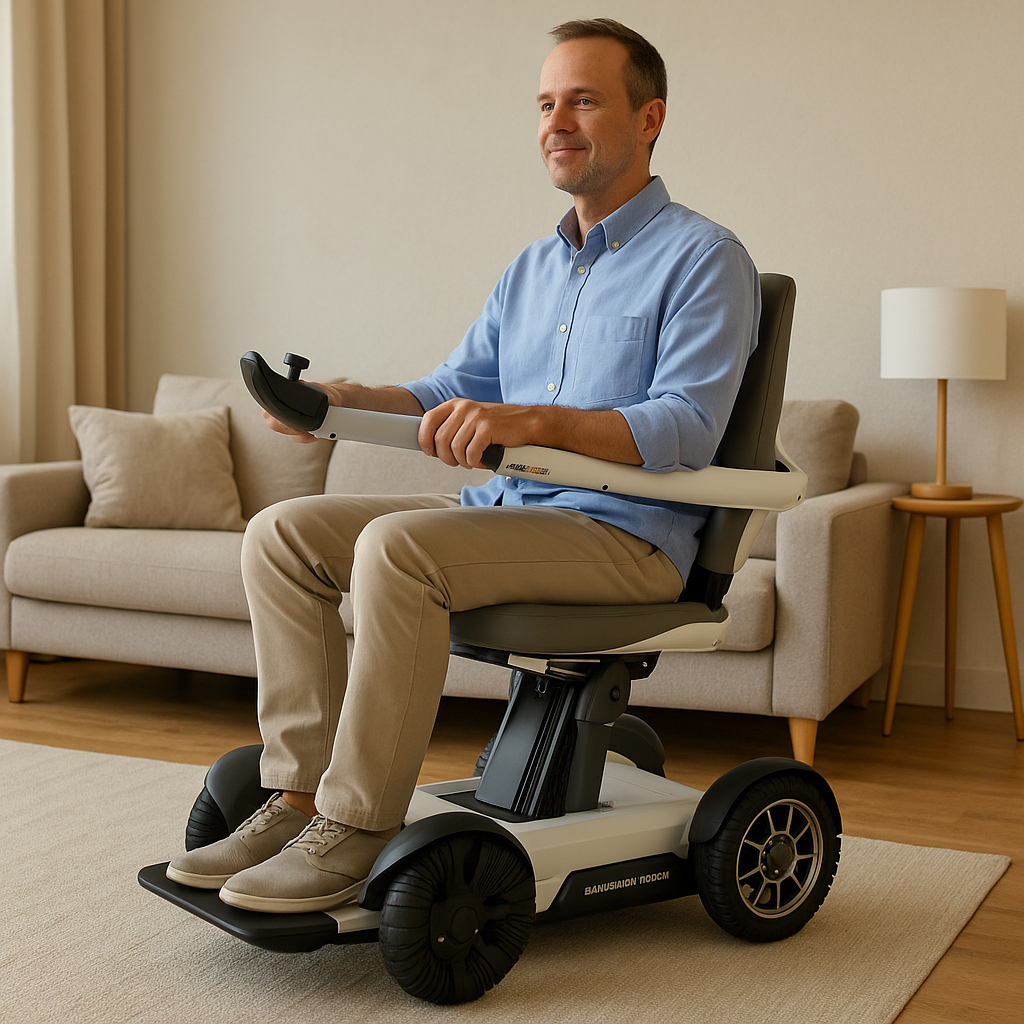
- This smart personal mobility vehicle is ideal for indoor daily living, helping individuals with limited mobility move independently around their home — whether navigating to the kitchen, bedroom, or washroom — while ensuring comfort and safety throughout the day.
- Its compact and agile design makes it perfect for tight indoor spaces, allowing smooth movement through narrow hallways, around furniture, and in crowded rooms, which enhances convenience inside homes, hospitals, and care centers.
- The vehicle also supports short-distance outdoor travel, enabling users to confidently visit parks, shopping malls, community areas, or sidewalks, helping them remain socially active and connected.
- It is highly useful in large public facilities such as airports, corporate campuses, universities, and stations, where longer walking distances can cause fatigue — making accessibility easier and faster.