
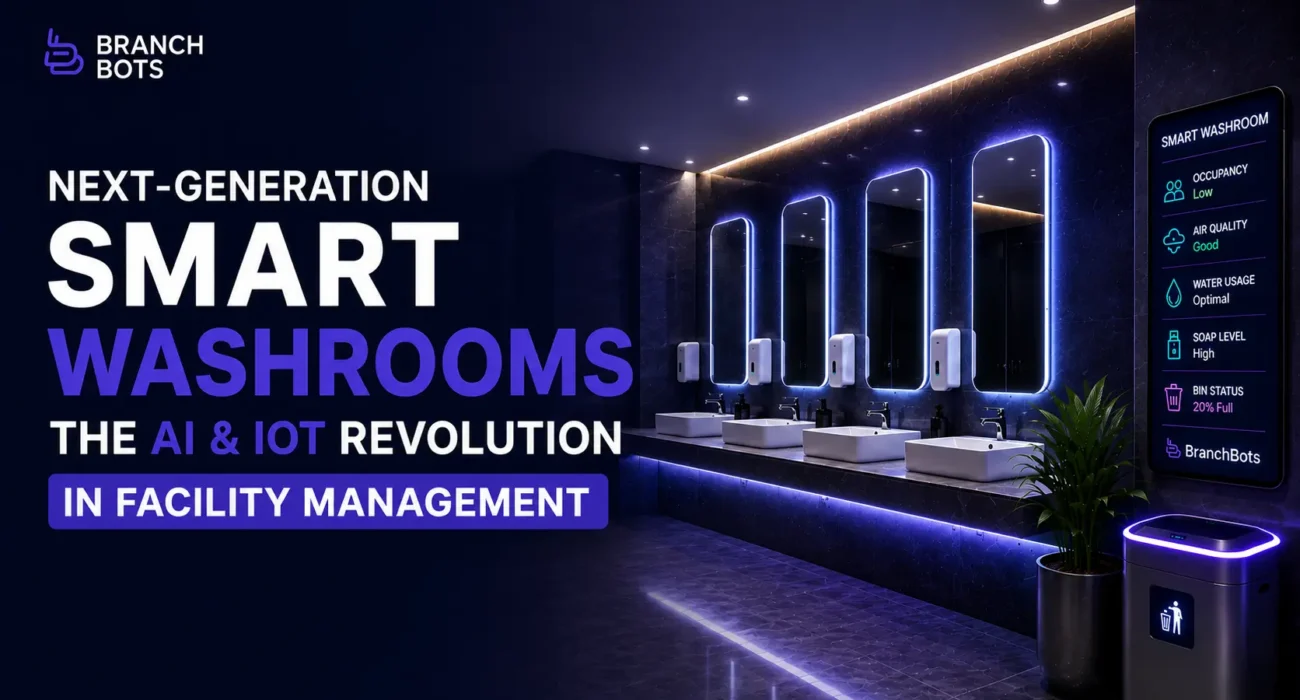
Washrooms are one of the most overlooked yet most-used spaces in any commercial facility. They directly impact customer satisfaction, brand perception, hygiene standards, and operational costs — yet most businesses still manage them the same way they did 20 years ago: manually, reactively, and inefficiently.
That’s changing fast. In 2026, smart washroom solutions powered by IoT sensors, real-time data, and intelligent dashboards are revolutionizing how airports, malls, hospitals, hotels, offices, and stadiums operate their restroom facilities.
At BranchBots, we help businesses across Saudi Arabia and the wider GCC transition from traditional washrooms to fully connected, sensor-driven, data-rich environments — reducing costs, improving hygiene, and delivering an outstanding user experience.
In this guide, we’ll explore exactly what a smart washroom is, how the technology works, what benefits it delivers, and how BranchBots can help you implement it.
What Is a Smart Washroom?
A smart washroom is a sensor-driven, IoT-connected restroom environment that uses real-time data to monitor, manage, and optimize every aspect of washroom operations — from cleanliness and air quality to consumable levels, occupancy, water usage, and maintenance.
Instead of relying on fixed cleaning schedules or guesswork, smart washroom technology uses a connected network of intelligent sensors to capture live data and feed it into an intuitive dashboard. Facility managers can then make data-driven decisions in real time — improving hygiene, reducing waste, and enhancing the overall washroom experience.
In short, a smart washroom replaces guesswork with intelligence.
Why Smart Washrooms Matter in 2026
Three major forces are pushing businesses to upgrade their restrooms with intelligent washroom solutions:
1. Rising Operational Costs
Manual cleaning, frequent restocking, and reactive maintenance are expensive. Smart restroom systems dramatically reduce labor costs by enabling cleaning and consumable replenishment only when actually needed.
2. Higher Hygiene Expectations
Post-pandemic, customers expect spotless, well-maintained washrooms — and they actively avoid brands that fail to deliver. A modern smart washroom system ensures consistent, monitored hygiene standards across every facility.
3. Sustainability and Vision 2030
Water conservation, energy efficiency, and waste reduction are critical pillars of Saudi Arabia’s Vision 2030. Smart washroom technology directly supports these goals through real-time water monitoring, leak detection, and efficient resource use.
The bottom line: businesses that adopt smart washroom solutions today will lead their industries tomorrow.
How Smart Washroom Technology Works
A smart washroom is built on three integrated layers:
Layer 1: IoT Sensors
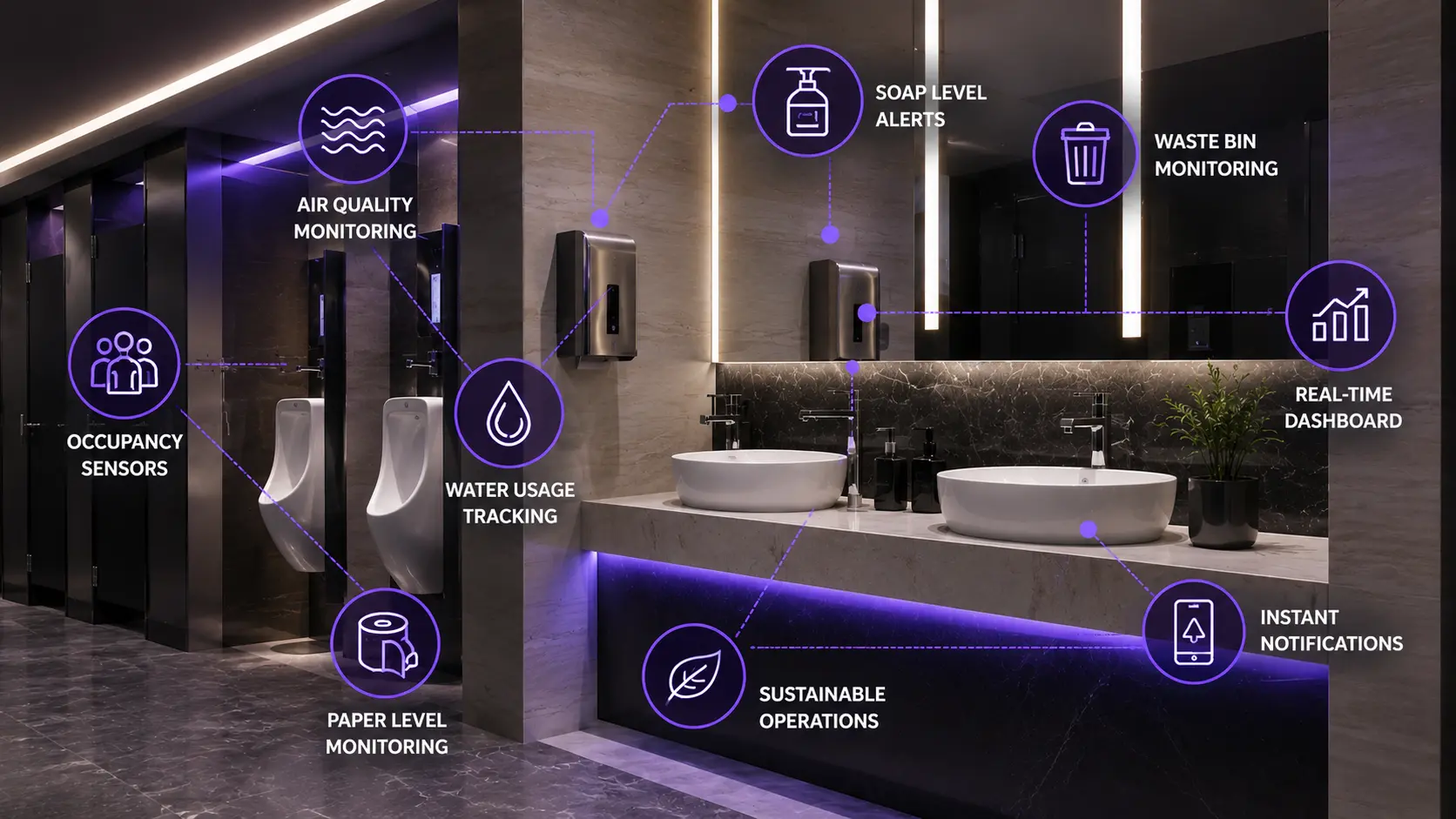
A network of intelligent sensors is installed throughout the washroom to capture data on virtually every variable — occupancy, air quality, water flow, soap and tissue levels, waste bin fill levels, tap usage, and more.
Layer 2: Cloud-Based Data Platform
All sensor data flows into a secure cloud platform where it’s processed, analyzed, and visualized through an interactive 3D dashboard. The platform identifies patterns, generates alerts, and supports predictive decision-making.
Layer 3: Real-Time Dashboards & Alerts
Facility managers access live data through web or mobile dashboards customized to their business. Custom SMS and email alerts notify teams of issues — low soap levels, full bins, leaks, or hygiene concerns — so problems are solved before users notice them.
This sensor-to-dashboard ecosystem turns your washroom into a fully connected, intelligent space.
Key Features of a Smart Washroom System
A world-class smart washroom solution monitors and manages a wide range of variables. Here are the core features you should expect from any modern system.
1. Real-Time Occupancy Monitoring
Occupancy sensors track which cubicles are in use and how many people are in the washroom at any given time. This data helps:
- Reduce queues during peak hours
- Direct visitors to less crowded washrooms via digital signage
- Allocate cleaning staff dynamically based on actual usage
- Optimize cleaning frequency
2. Air Quality Sensors
Smart sensors continuously measure:
- Humidity — to prevent mold and discomfort
- Temperature — for user comfort
- VOCs (Volatile Organic Compounds) — to detect unpleasant odors
- CO₂ levels — to ensure proper ventilation
When air quality drops below thresholds, automated alerts trigger ventilation adjustments or cleaning interventions.
3. Water Management & Leak Detection
Real-time water flow sensors monitor:
- Litres of water consumed
- Number of flushes
- Smart-flush optimization
- Instant leak detection with alarms
This not only saves significant amounts of water (and money), it also prevents expensive structural damage from undetected leaks.
4. Consumables Tracking
Sensors monitor levels of:
- Soap and sanitizer dispensers
- Toilet tissue rolls
- Hand towels
- Air fresheners
When supplies run low, the system automatically alerts staff to refill — eliminating the embarrassing situation of an empty soap dispenser during peak hours.
5. Smart Waste Bin Monitoring
Waste bin sensors detect fill levels and trigger alerts when bins are near full or full. This:
- Eliminates unnecessary cleaning checks
- Prevents overflow situations
- Optimizes janitorial routes
- Reduces wasted labor
6. Tap and Faucet Monitoring
Smart taps track:
- Water temperature
- Volume dispensed per use
- Stagnant water (critical for legionella prevention)
- Usage patterns
This is especially important in hospitals, hotels, and schools where waterborne pathogens pose serious health risks.
7. Wipe Sensors and Cleaning Verification
Wipe sensors verify that cleaning has actually been performed at scheduled intervals. This:
- Provides accountability for cleaning staff
- Generates auditable cleaning logs
- Ensures SLAs are met
- Enables data-driven cleaning performance reviews
8. People Counting Sensors
Advanced people counting systems track footfall by entrance and time of day. The resulting data helps:
- Schedule cleaning around peak periods
- Reallocate staff during low-traffic times
- Forecast consumable needs
- Justify staffing decisions with real evidence
9. Digital Workforce Scheduling
Moving from paper-based to digitized cleaning schedules introduces:
- Standardized, auditable processes
- Real-time task tracking
- Remote workforce management
- Improved staff timekeeping and accountability
10. Customer Satisfaction Feedback
Touchscreen panels at washroom exits collect instant user feedback — turning every visitor into a quality auditor and giving managers actionable insights to improve.
The Benefits of Smart Washroom Solutions for Your Business
Implementing smart washroom technology delivers measurable, multi-dimensional ROI.
Reduced Operational Costs
By cleaning, restocking, and maintaining only when actually needed, businesses typically reduce washroom operational costs by 25–40% within the first year.
Enhanced Customer Experience
Cleaner facilities, fewer empty dispensers, less queuing, and better air quality directly improve visitor satisfaction — which translates into stronger brand perception and customer loyalty.
Improved Hygiene Standards
Continuous monitoring and instant alerts ensure that hygiene issues are addressed immediately, not hours later. This is especially critical in hospitals, food service, and high-traffic public spaces.
Significant Water Savings
Smart water monitoring, leak detection, and smart-flush technology cut water consumption substantially — supporting both sustainability goals and lower utility bills.
Smarter Maintenance
By monitoring usage patterns and identifying issues early, facility managers can shift from reactive to predictive maintenance — preventing costly breakdowns and emergency callouts.
Greater Staff Accountability
Digital logs, wipe sensors, and standardized checklists ensure that cleaning SLAs are met consistently — and provide audit trails for management and clients.
Scalability Across Multiple Facilities
A centralized dashboard lets you monitor washrooms across multiple buildings, branches, or cities from one screen — perfect for chains, malls, airports, and large institutions.
Sustainability and ESG Reporting
Real-time data on water, consumables, and energy use makes it easy to track and report environmental performance — critical for ESG compliance and Vision 2030 alignment.
Custom Dashboards and Bespoke Solutions
Every business is different. The best smart washroom platforms offer fully customized dashboards, alerts, and KPIs tailored to your operational priorities.
Industries That Benefit Most from Smart Washroom Technology
While every facility benefits from intelligent washrooms, certain industries see particularly strong ROI.
Airports
With thousands of travelers passing through daily, airport washrooms face extreme demand. Smart washroom solutions help airport operators maintain pristine conditions, predict peak periods, and ensure consumable availability — all while reducing operational costs.
Shopping Malls
Mall washrooms are a critical part of the shopping experience. Smart monitoring ensures cleanliness and availability during peak shopping hours, directly impacting customer dwell time and repeat visits.
Hospitals and Healthcare
In healthcare, washroom hygiene is non-negotiable. Smart restroom systems support infection control, legionella prevention, and continuous hygiene monitoring — protecting patient safety and meeting regulatory requirements.
Hotels and Hospitality
Guest expectations are higher than ever. Smart washroom technology helps hotels deliver consistent, premium washroom experiences across every room and public area while reducing housekeeping costs.
Stadiums and Event Venues
Stadium washrooms face explosive demand during events. Smart systems handle the surge by dynamically allocating cleaning staff and predicting consumable needs before they run out.
Schools and Universities
Educational institutions benefit from smart washrooms through improved hygiene, lower water bills, vandalism detection, and better resource planning.
Corporate Offices and Business Parks
Modern offices are using smart washroom solutions to enhance employee well-being, reduce facility management overhead, and demonstrate corporate commitment to sustainability.
Mosques and Religious Sites
High-traffic religious facilities, especially in Saudi Arabia, benefit enormously from smart washroom monitoring during peak prayer and pilgrimage times — ensuring cleanliness and ablution area readiness.
BranchBots Smart Washroom Solutions
At BranchBots, we don’t just install sensors — we partner with you to design, deploy, and manage a fully customized smart washroom ecosystem that fits your business goals.
What We Deliver
✅ Site Assessment & Consultation — We analyze your current washroom operations, identify pain points, and design a tailored smart washroom strategy.
✅ IoT Sensor Installation — Our technicians install a comprehensive sensor network covering occupancy, air quality, water flow, consumables, waste bins, and more.
✅ Custom 3D Dashboard Design — We build intuitive, real-time dashboards customized to your specific KPIs and reporting needs.
✅ Integration with Your Existing Systems — Our smart washroom platforms can integrate with your facility management software, CMMS, or BMS.
✅ Staff Training & Onboarding — We train your facility and cleaning teams to use the system effectively from day one.
✅ Ongoing Support & Maintenance — Our local Saudi-based team provides continuous support, system updates, and performance optimization.
Why Businesses Choose BranchBots
- Local expertise — Headquartered in Saudi Arabia with deep regional knowledge
- Vision 2030 aligned — Solutions built to support national sustainability and smart city goals
- End-to-end services — From consultation to long-term support, we handle everything
- Proven robotics ecosystem — Smart washrooms are just one part of our intelligent automation portfolio
- Bespoke design — No two facilities are the same. Neither are our solutions.
Explore all BranchBots solutions →
ROI: Why Smart Washrooms Pay for Themselves
Decision-makers always ask: “Is it worth the investment?” Here’s the honest answer based on real-world deployments.
Typical Cost Reductions
- 20–40% reduction in cleaning labor costs through demand-based scheduling
- 30–50% reduction in water consumption through leak detection and smart flush
- 15–25% reduction in consumable waste through accurate usage tracking
- Significant reduction in reactive maintenance callouts
Payback Period
Most businesses recover their smart washroom investment within 12–24 months, after which the system delivers continuous savings year after year.
Hidden Benefits
Beyond direct savings, smart washrooms drive:
- Higher customer satisfaction and repeat visits
- Better employee experience and productivity
- Stronger ESG and sustainability reporting
- Audit-ready hygiene compliance
- Brand differentiation in competitive markets
Frequently Asked Questions About Smart Washrooms
What is a smart washroom?
A smart washroom is a sensor-driven, IoT-enabled restroom that uses real-time data to monitor occupancy, air quality, water usage, consumables, waste, and hygiene — enabling facility managers to make data-driven decisions and deliver a superior user experience.
How does smart washroom technology work?
It works by deploying a network of IoT sensors throughout the washroom that capture live data and send it to a cloud-based platform. Facility managers access real-time dashboards and receive automated alerts to manage cleaning, maintenance, and supplies proactively.
What sensors are used in a smart washroom?
A complete smart washroom system uses occupancy sensors, air quality sensors (humidity, temperature, VOCs, CO₂), water flow sensors, leak detectors, consumable level sensors, waste bin sensors, tap sensors, and wipe sensors for cleaning verification.
Are smart washrooms expensive to install?
Initial investment varies based on the facility size and number of features, but most businesses recover their investment within 12–24 months through reduced labor, water, and consumable costs. BranchBots offers flexible deployment models to fit different budgets.
Can smart washrooms work in older buildings?
Yes. Most smart washroom solutions are designed for both new construction and retrofit installations, making them accessible to virtually any existing facility.
Are smart washroom systems secure?
Yes. Modern smart washroom platforms use enterprise-grade encryption, secure cloud architecture, and comply with global data privacy standards.
Which industries benefit most from smart washrooms?
Airports, shopping malls, hospitals, hotels, stadiums, schools, mosques, government buildings, and corporate offices all see strong ROI from smart restroom technology.
How does BranchBots support smart washroom deployment in Saudi Arabia?
BranchBots provides end-to-end services including assessment, sensor installation, custom dashboard design, system integration, staff training, and ongoing maintenance — all delivered by a local Saudi-based team.
Ready to Build the Washroom of the Future? Talk to BranchBots
The era of unmonitored, reactive washroom management is over. Forward-thinking businesses across Saudi Arabia are upgrading to smart washroom solutions to cut costs, enhance hygiene, delight customers, and support sustainability goals.
Whether you run an airport, a hospital, a shopping mall, a corporate campus, or a hotel chain — BranchBots has the expertise, technology, and local presence to make your smart washroom transformation a success.
Take the Next Step
👉 Explore BranchBots services: https://branchbots.com/service/
👉 Contact our team: https://branchbots.com/contact-us/
📞 Call us today: +966 50 974 1317
Smart washrooms aren’t just an upgrade — they’re the new standard. Let’s build yours together.
— The BranchBots Team